Quick answer: In most of Australia, including Sydney, the best house orientation puts your main living areas facing north, ideally within 15° west to 25° east of true north. North-facing windows let in low winter sun for warmth, while eaves block the higher summer sun. The direction your street frontage faces matters less than where the living areas sit, so a south-facing block with a north-facing backyard often works best.
If you’re comparing blocks or planning a new build, house orientation is easy to overlook and hard to change later. It affects how warm your home stays in winter, how hot it gets in summer, how much natural light you get, and what you spend on heating and cooling.
That’s the core of passive solar design in Australia: put the right rooms on the right side and let the sun do some of the work. It’s worth raising early with any builder in Sydney you speak to. Here’s how to choose the right house orientation for your block.
Does “North-Facing” Mean the Front of the House or the Living Areas?
“North-facing” can mean the street frontage or the living areas. For good house orientation, it’s the living areas that count.
Because the sun tracks across the northern sky in Australia, living areas should face north in most climates. The Australian Government’s YourHome guide recommends placing them within 15° west to 25° east of true north, so your living room doesn’t need to face exactly north to get the benefit. That gives you some flexibility when a block sits on an angle.
So is a north-facing house good in Australia? A north-facing frontage works, but the living areas then need to sit at the front, which can cost privacy. A north-facing backyard is often better. You get a sunny outdoor area in winter and living areas that open straight onto private outdoor space.
What Is the Best House Orientation in Sydney and NSW?
In Sydney, the best house orientation for winter sun is north-facing living areas, with eaves sized to shade the north windows in summer. With mild to cool winters and warm to hot summers, especially in Western Sydney, the city suits passive solar home design well.
To position a house for maximum winter sun, put the living, dining and family rooms on the north side with the main windows, and keep that side clear of tall structures. Low winter sun reaches deep into these rooms, while a properly sized eave or pergola blocks most of the high summer sun.
YourHome notes that orientation for passive heating suits climate zones 4 to 8, which covers Sydney and most of NSW. Check your address on the ABCB climate map. For new homes in NSW, orientation also feeds into BASIX. The Planning Portal’s BASIX thermal comfort guidance recommends north-facing living areas and windows, with laundries, bathrooms and garages on the south, east and west, so getting orientation right early helps a design meet its BASIX targets.
Don't Settle for Less—Build Excellence with Dhursan
House Orientation Guide: Which Rooms Suit Each Side of the House?
Each side of a house gets a different kind of sun, so each suits different rooms.
| Side of house | Sun it gets | Rooms it suits | Watch out for |
| North | Low winter sun most of the day; high summer sun eaves can block | Living, dining, family room, outdoor entertaining | Unshaded north glass can overheat in summer |
| East | Morning sun all year | Kitchen, breakfast area, bedrooms | Low morning sun slips under eaves |
| West | Strong afternoon sun, hottest in summer | Garage, laundry, bathrooms, storage | Large unshaded windows add heat at the hottest time of day |
| South | Little direct winter sun; some early and late summer sun | Bedrooms, bathrooms, laundry, media room | Cooler and darker in winter |
Is an east-facing house good? Yes, for kitchens and bedrooms, which get bright morning light and miss the afternoon heat. Large east windows may need external screens.
West-facing house pros and cons in Australia: you get warm afternoon light in winter, but summer heat pushes up cooling costs. Put the garage and utility rooms on the west.
Is a south-facing house good in Australia? A south-facing block often is, as the next section explains. South-facing rooms suit bedrooms and wet areas rather than living spaces.
For natural light and ventilation, place windows on opposite sides of a room so breezes can clear out summer heat.
Choosing a Floor Plan to Suit Your Block’s Orientation
How to choose the right house orientation starts with your block. For solar orientation on a new home, find true north on your survey or site plan, note where the street is, then pick a design that puts the living areas towards the sun. YourHome says good orientation is possible on almost any block with careful design.
South-facing street frontage
The backyard faces north, so the garage, entry and bedrooms go at the front and the living areas open onto a sunny backyard. See our south facing house designs for layouts planned this way.
North-facing street frontage
The sun is at the front. Living areas can still sit there, with a courtyard or screening for privacy and the garage kept off most of the north face.
East-west blocks
One long side boundary faces north. To orient a home on an east-west block, set the house towards the southern boundary, within council setback rules, and run the living areas along the north side. If the street is to the west, shade the front windows well.
Narrow, corner and overshadowed blocks
Narrow blocks can draw in north light through courtyards, voids and high windows, as our narrow lot house plans show. Corner blocks often give more choice; see our corner block house designs. If a neighbour or large trees shade your north side, consider upstairs living areas or clerestory windows.
How to Improve a Home with Poor Orientation
Poor orientation hurts energy efficiency. South-facing living areas stay cold and west-facing rooms overheat, so heating and cooling run harder. These changes help:
- Shading: external blinds, awnings or screens stop heat before it reaches the glass.
- Windows and glazing: keep west windows small or upgrade the glass, and add north windows where you can.
- Insulation: keeps warmth in during winter and heat out in summer.
- Ventilation: windows on opposite sides and ceiling fans move air through.
- Landscaping: planting on the west shades walls, while deciduous trees to the north let winter sun in.
To keep a west-facing house cool, block the afternoon sun outside the window first.
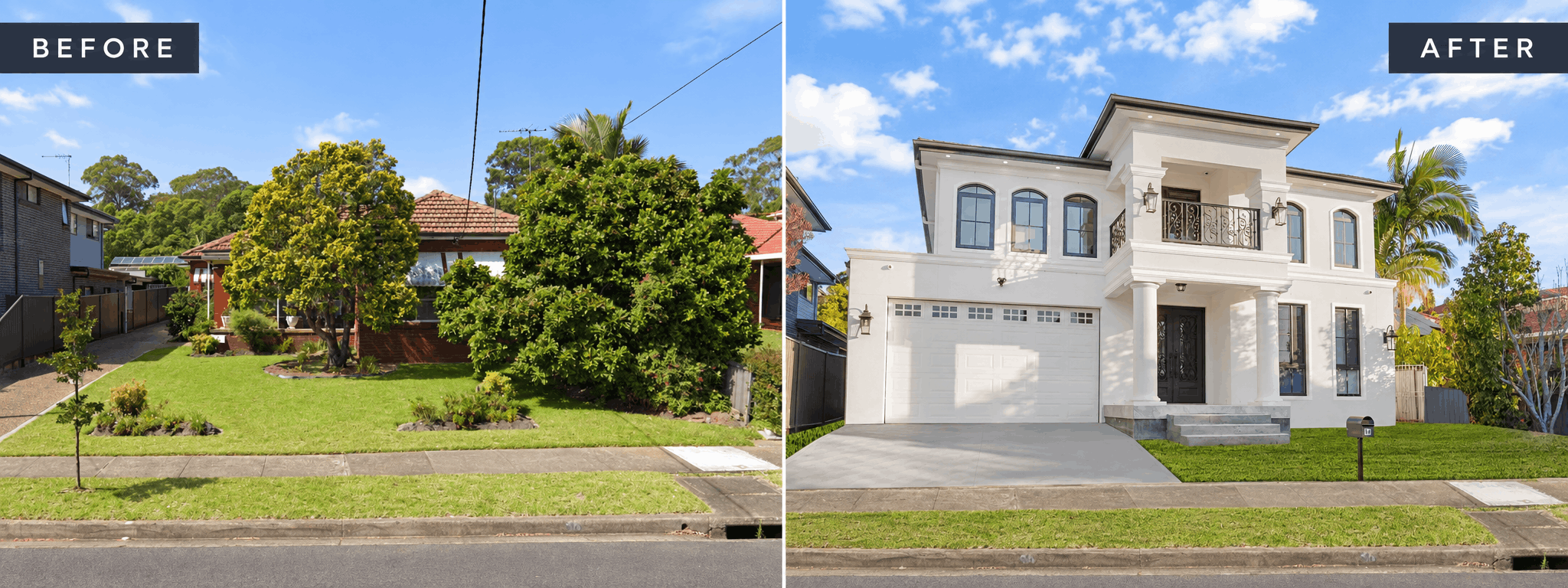
When the layout itself faces the wrong way, a knockdown rebuild lets you replan around the sun on the same block. If you’re building new, our team at Dhursan Construction can help you choose from our home designs or create something tailored with bespoke home designs, so the living areas, windows and outdoor spaces suit your block’s orientation from day one.
Book a free consultation or call 02 4666 3803. Bring your site plan, and we’ll show you which designs work best for the way your block faces.
FAQs
Is a south-facing block bad?
No. It usually means a north-facing backyard, so living areas and outdoor space can sit on the sunny side, with the garage and bedrooms at the front.
What is the best orientation for solar panels on a house in Australia?
North-facing roof sections generally produce the most solar power over a year. East and west-facing roofs produce a little less overall, but they shift generation towards the morning or afternoon, which can better match when many households use power. The best setup depends on your roof and your daily routine, so ask an accredited installer to assess it.
Transform Your Vision into Reality with Dhursan Construction
Is north-facing always best everywhere in Australia?
Not everywhere. It suits Sydney and most of Australia, where winter heating matters. In tropical areas, design leans towards shade and catching breezes instead.
Can a knockdown rebuild fix poor orientation?
In most cases, yes. A new floor plan can put the living areas on the north side, though it still has to meet the planning controls and approval pathway (DA or CDC) that apply to your block.
What is the difference between true north and magnetic north in house design?
True north, also called solar north, is what matters for sun and orientation. A compass points to magnetic north, which differs by several degrees depending on where you are, so use the true north arrow on your survey or site plan.