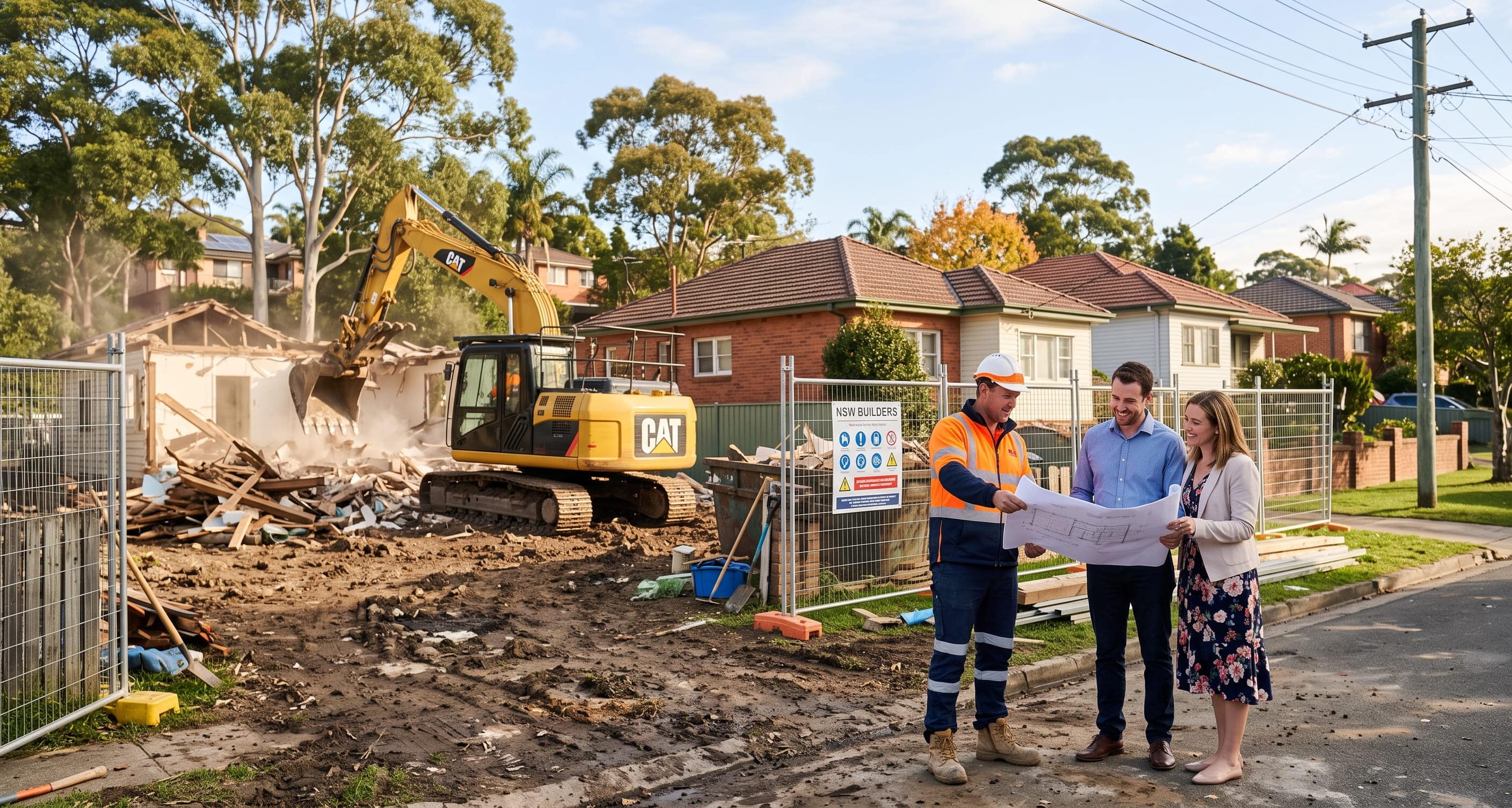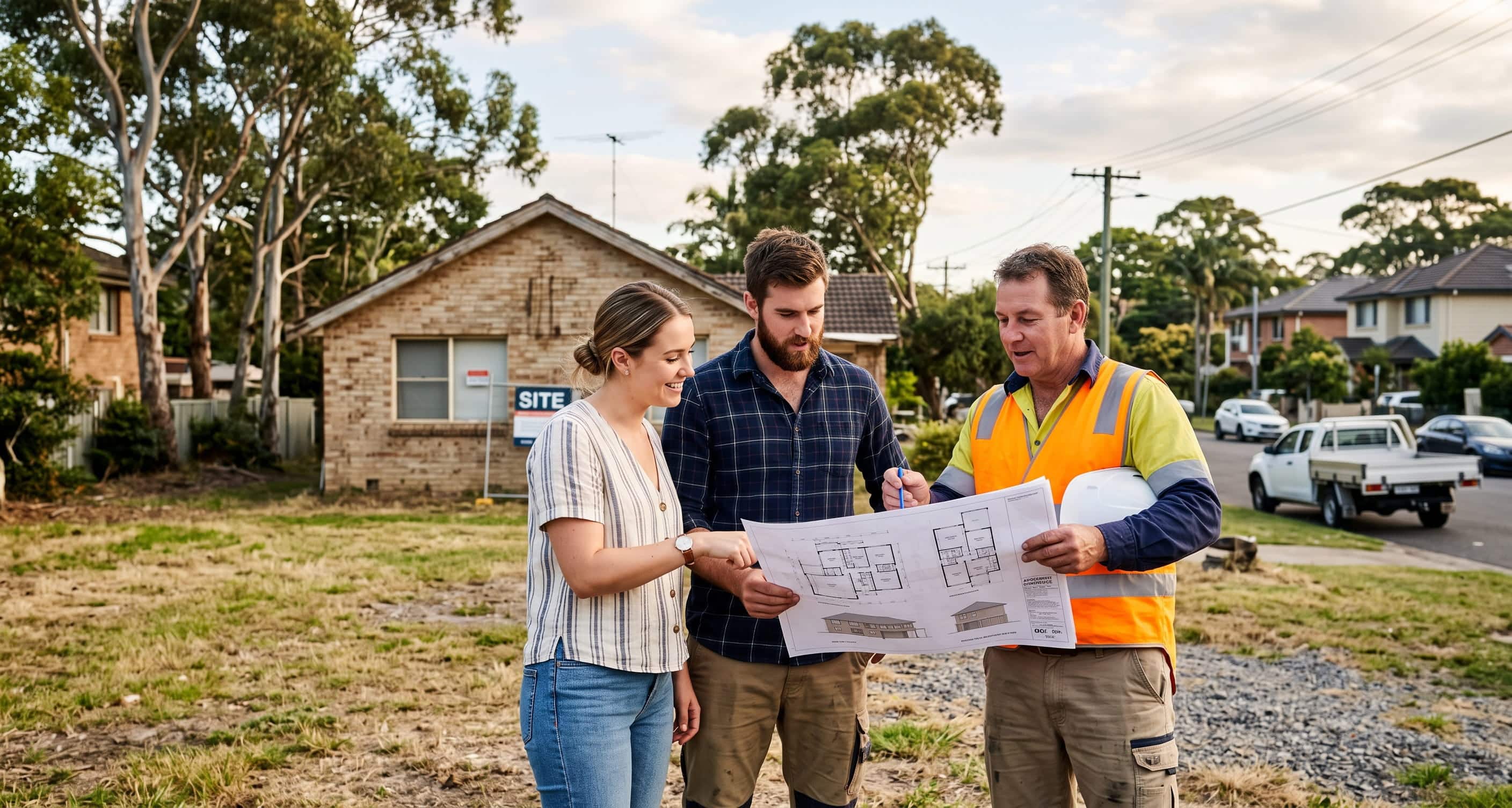
Quick answer: Knockdown rebuilds in NSW don’t attract a separate “knockdown tax”, but they do come with specific regulatory steps, including a Construction Certificate, a Demolition Notice under the Work Health and Safety Regulation, and sometimes a Development Application depending on your council and zoning. Stamp duty was already paid when you purchased the land, so rebuilding on land you own doesn’t trigger it again, though duty does apply if you’re buying a knockdown site. Costs to budget for include demolition, asbestos checks, council fees and a new Occupation Certificate. Rules and fees vary by council, so always confirm current requirements with your local authority or a licensed builder before locking in a budget.
If you already own a home in Sydney and you’re weighing up whether to renovate or start again, there’s a good chance you’ve spent a few late nights googling knockdown rebuild rules. It’s a fair thing to worry about. You don’t want to fall in love with a design, then find out halfway through that your council needs extra approvals, or that there’s a stamp duty bill you didn’t budget for. The good news is that knockdown rebuilds are one of the more straightforward paths in residential construction, once you know what actually applies to your situation and what doesn’t.
Do You Pay Stamp Duty on a Knockdown Rebuild?
This is usually the first question, and the answer brings relief to most people. If you already own the land, you don’t pay stamp duty again just because you’re demolishing the existing house and building a new one. Stamp duty in NSW applies to the transfer of property ownership, not to construction activity on land you already hold. So if you bought your block years ago and you’re now rebuilding on it, no new stamp duty applies to the build itself.
Where stamp duty does come into it is if you’re purchasing a knockdown property specifically to rebuild. In that case, duty is calculated on the purchase price of the land and existing dwelling, the same as any other property purchase in NSW. It’s worth getting advice from your conveyancer or Revenue NSW on the exact figure for your situation, since thresholds and rates are reviewed regularly.
Demolition Approvals You’ll Need
Before any wall comes down, the required demolition approval must be in place. In NSW, house demolition generally requires development consent through a Development Application (DA) or a Complying Development Certificate (CDC) that covers the demolition works. Your builder or demolition contractor should confirm the approval pathway and ensure all relevant conditions are met before work begins.
Asbestos must also be addressed before demolition. Any existing asbestos register should be checked and, where no register is available, a competent person must inspect the house for asbestos. Homes built before 1990 are particularly likely to contain asbestos-containing materials. Any asbestos identified must be safely removed before demolition proceeds, using appropriately licensed removalists where required and obtaining the necessary clearance. These precautions protect workers, neighbours and everyone visiting the site.
Will Your New Build Need a Separate Approval?
Demolition is only one approval. The new home itself also needs to go through either a Development Application or a Complying Development Certificate, and that’s assessed separately based on your design. Straightforward rebuilds that meet standard height, setback and floor space controls often qualify for the faster CDC pathway through a private certifier. More complex sites, heritage overlays, flood-prone land, or designs that push boundaries on height or bulk, usually need a full DA with council. This is one of the areas where an experienced Sydney builder can save you months, simply by knowing which pathway your site is likely to qualify for before you’ve paid for a design.
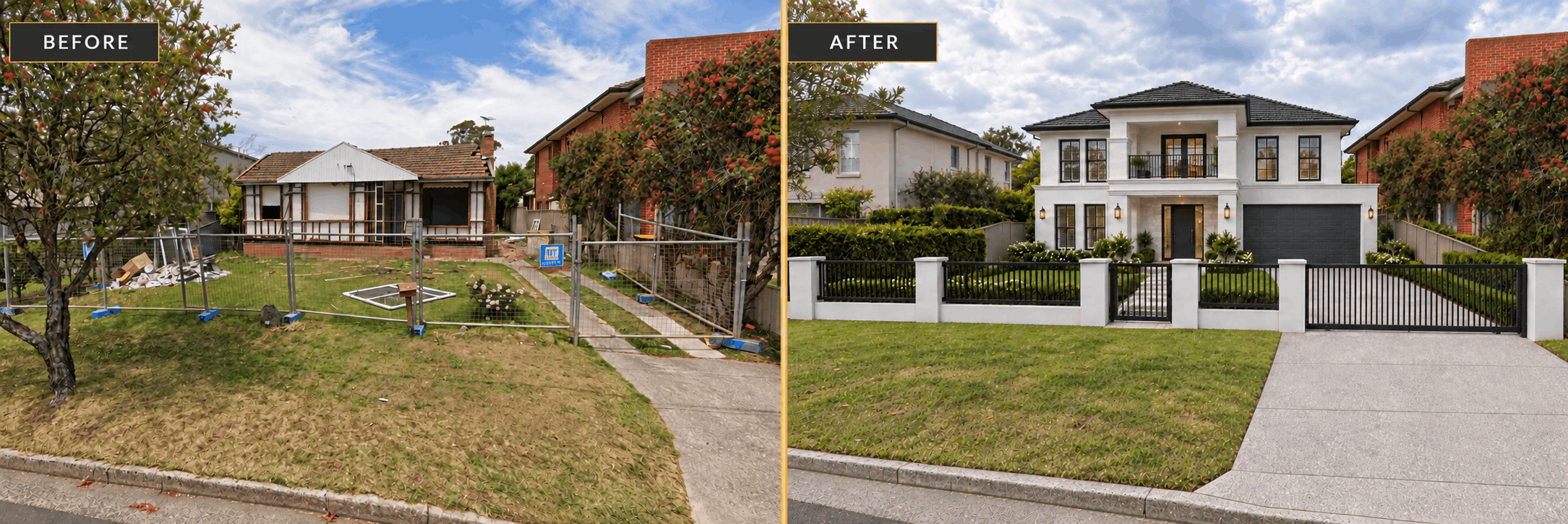
Other Costs and Compliance Points to Budget For
Beyond demolition and approvals, a few other costs tend to catch people off guard:
- Disconnection of existing services (power, gas, water) before demolition.
- Tree removal permits if established trees are on the block.
- Council inspection fees at various construction stages.
- Council development contributions under section 7.11 or 7.12 of the Environmental Planning and Assessment Act, which fund local infrastructure like roads, drainage and parks. The amount varies significantly by council and catchment, so it’s worth checking the applicable rate with your council
- A new Occupation Certificate once the build is complete, issued by your appointed Principal Certifier, confirming the home meets the approved plans and is safe to occupy
None of these are unusual or a sign something has gone wrong. They’re standard parts of any knockdown rebuild in NSW, and a builder who works in this space regularly will already have them factored into your quote and program.
If you’re at the stage of comparing your existing home against what a rebuild could offer, it’s worth having a look at Dhursan Construction’s knockdown rebuild service, which walks through how the process runs from demolition through to handover. It’s also worth browsing our display homes if you haven’t settled on a design yet, since walking through a finished home tends to make the whole decision easier.
FAQ
How long does a knockdown rebuild take from approval to move-in?
Most knockdown rebuilds in Sydney take between 12 and 14 months from demolition to handover, depending on design complexity, council processing times, and weather delays during construction. Simpler single storey designs on standard blocks tend to sit at the faster end of that range.
Can I live in a rental while my knockdown rebuild is underway?
Yes, and most people do. Since the existing house is demolished, you’ll need alternative accommodation for the full build period, so it’s worth factoring rent or temporary housing costs into your overall budget from the start.
Does my council require a heritage check before demolition?
Some councils, particularly in established Sydney suburbs, will check whether a property sits within a heritage conservation area before approving demolition. This doesn’t automatically stop a rebuild, but it can affect the approval pathway and timeline, so it’s worth confirming with council or your builder early.
Is a knockdown rebuild cheaper than a full renovation?
Not always, and it depends on the condition of the existing house. Older homes with structural, plumbing or electrical issues can sometimes cost more to renovate properly than to knock down and rebuild from a clean slate, especially once you account for the design flexibility a rebuild gives you.
What happens to the old house’s council rates and land value during the rebuild?
Council rates typically continue as normal during the build, based on the land value, since the property remains registered to you throughout. Once the new home is completed, council will usually reassess the property for future rating periods to reflect the improved value.