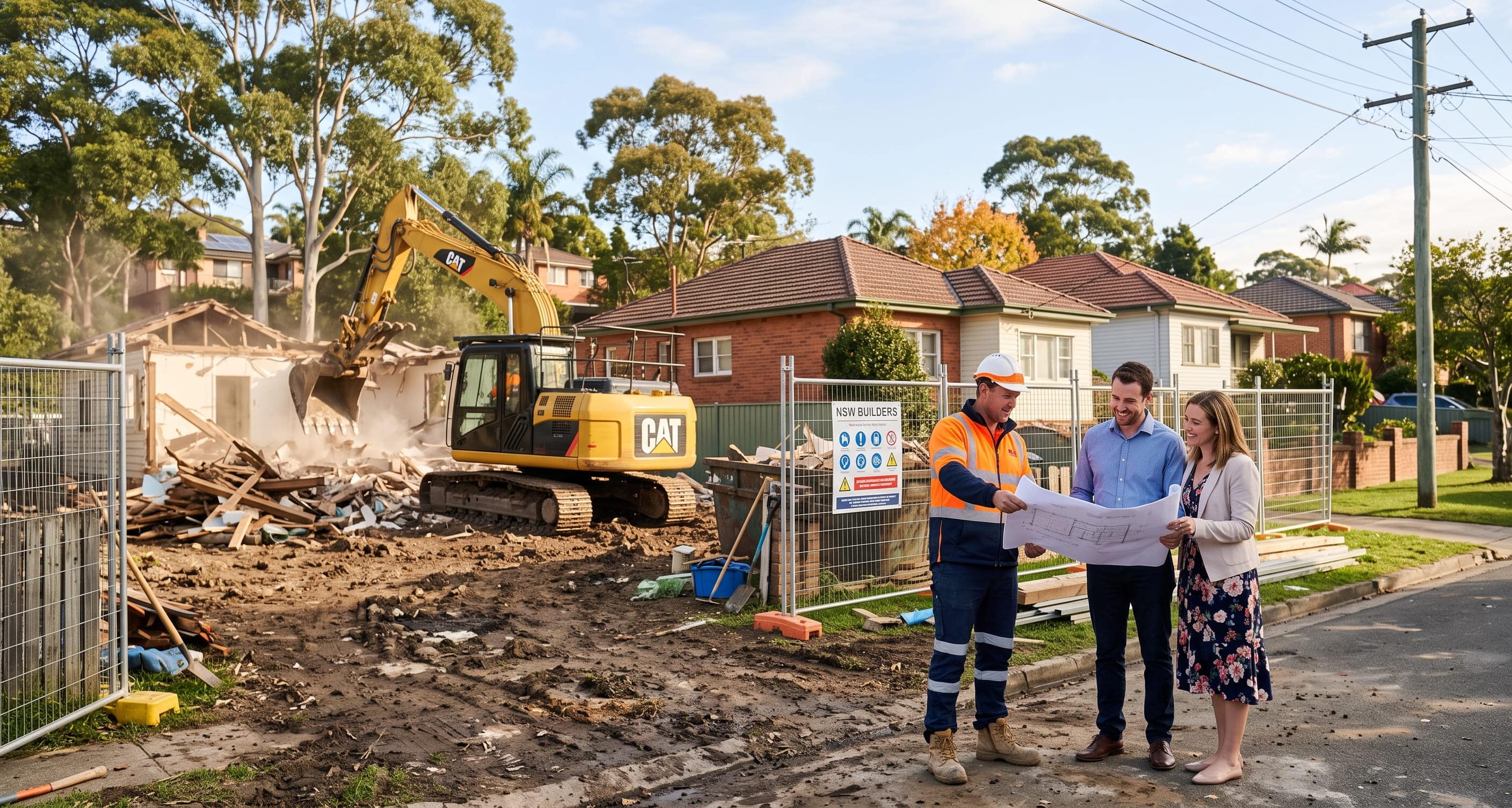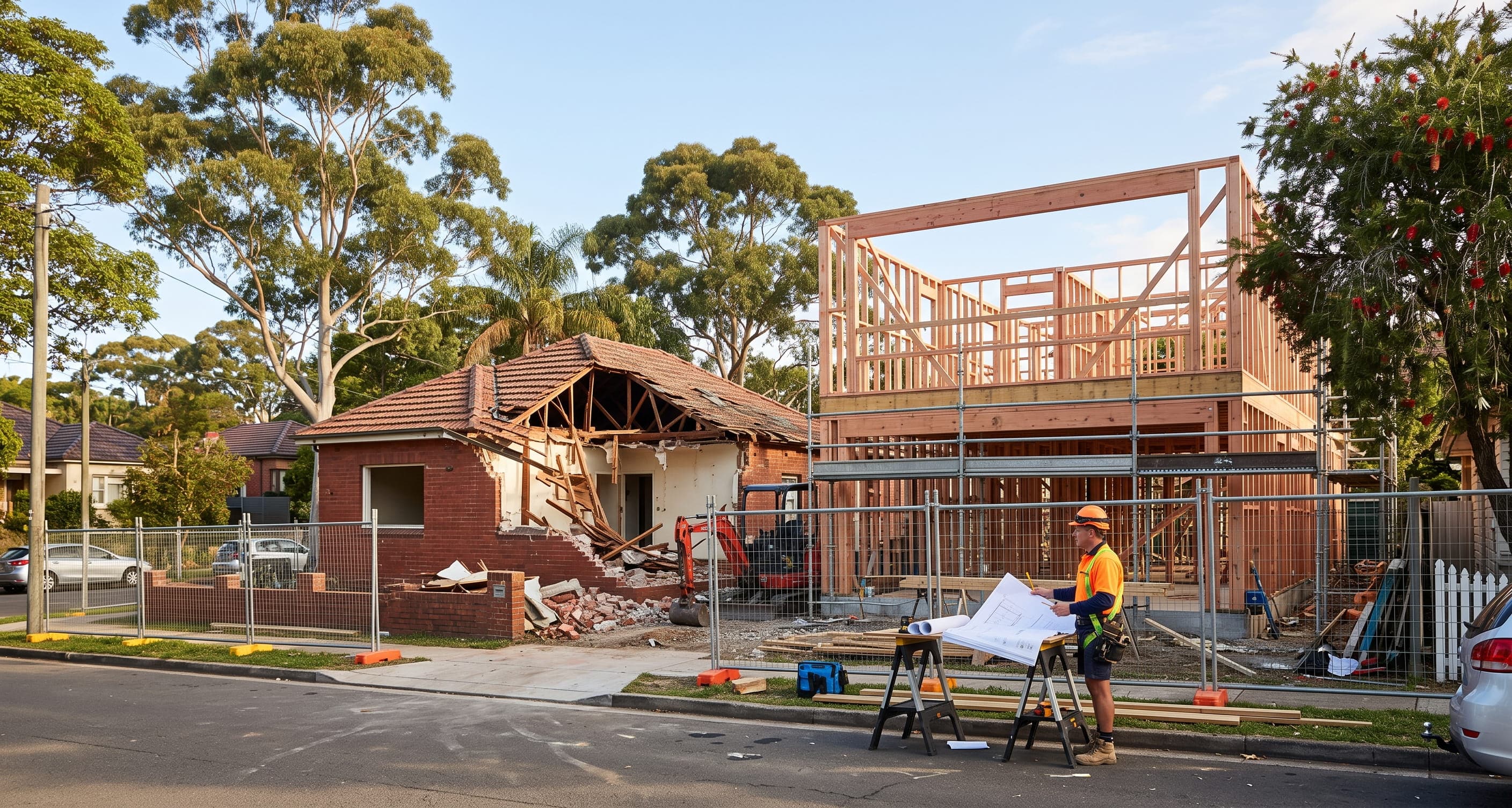
Quick answer: Starting a rebuild construction project involves five main steps: getting a site and feasibility assessment, sorting your finance and budget, choosing a builder and locking in a fixed price contract, obtaining council or private certifier approval, and then demolition followed by construction. In NSW, most knockdown rebuilds on a standard residential block can go through a Complying Development Certificate (CDC) rather than a full council DA, which can save months. The right order matters because skipping ahead, especially on approvals and finance, is where most delays and cost blowouts happen.
A knockdown rebuild rarely starts with a clear plan. It usually starts with a growing list of reasons the current house doesn’t work anymore, and a nagging sense that renovating won’t fix the real problem. Once that decision is made, the questions shift fast: what approvals are needed, what it actually costs, and which step has to happen before the next one can even start.
The process itself isn’t complicated once you know the order. Most of the stress people run into comes from doing things out of sequence, particularly around finance and approvals. Here’s how it should actually run.
Step 1: Assess your site before you fall in love with a design
Before you get attached to a floor plan, get your block properly assessed. This means understanding your zoning, easements, flood or bushfire overlays, slope, soil type, and whether there’s anything heritage listed nearby that could affect approval. A sloping block or one with a sewer main running through it changes what you can build and what it costs. This is also the stage to get a survey done if you don’t already have a recent one.
Step 2: Sort your budget and finance early
Rebuild costs cover more than the new house. You need to budget for demolition, disconnection of services, site preparation, any asbestos removal if the home is older, temporary accommodation while you’re between houses, and a contingency for the unexpected. Council development contributions can also apply and vary significantly depending on your council and catchment, so it’s worth checking the applicable rate with your council early rather than assuming a figure. Most lenders treat a knockdown rebuild differently to a standard mortgage, often requiring staged drawdowns tied to construction milestones. Talk to your bank or broker before you talk to builders, so you know what you can realistically spend.
Step 3: Choose a builder who works in rebuilds, not just new estates
Not every builder is set up for knockdown rebuild work. It requires managing demolition contractors, dealing with existing site conditions, and coordinating approvals that differ from a vacant land build. Ask any builder you’re considering how many rebuilds they’ve completed in your council area, what’s included in their fixed price, and how they handle unexpected site issues once demolition starts. If you’re weighing up a rebuild against other options, it’s worth browsing a display home to get a feel for finishes and layout before you commit to a design.
Step 4: Get your approvals sorted before you sign anything final
In New South Wales, a lot of standard knockdown rebuilds can go through a Complying Development Certificate through an accredited private certifier, which is generally faster than a full Development Application through council. Whether you qualify depends on things like block size, height limits, and setbacks, and certain sites are excluded from the CDC pathway altogether, including those that are heritage listed, flood prone, or bushfire prone. Your builder or a certifier can tell you early which pathway applies to you, and this should happen before you finalise your contract, not after.
Step 5: Demolition, site works, and construction
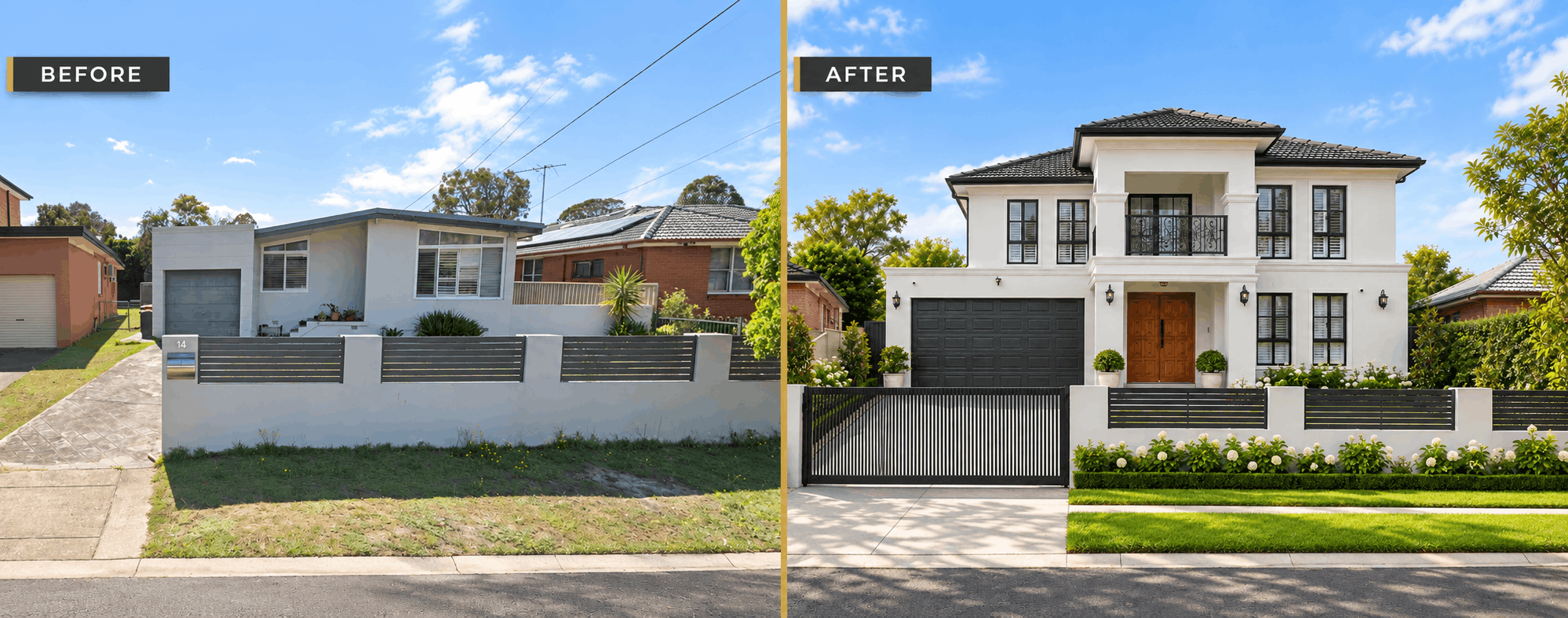
Once approval is granted, demolition happens first, followed by disconnection and reconnection of services, then the usual build stages: slab, frame, lock-up, fit-out, and handover. A good builder will walk you through a realistic construction timeline at contract signing so you’re not guessing month to month.
If you’re still deciding between knocking down and rebuilding versus renovating, our knockdown rebuild page breaks down when each option makes more sense. As a Sydney based builder working across council areas from the Hills District to the South West, Dhursan Construction manages the approval and build process end to end so you’re not left chasing certifiers and contractors yourself.
FAQ
How long does a knockdown rebuild take in Sydney?
From approval to handover, most single dwelling rebuilds take between 12 and 14 months, depending on council processing times, weather, and how complex the design is.
Do I need a DA or can I use a CDC for my rebuild?
Many standard residential blocks qualify for a Complying Development Certificate, which is faster than a full DA. Blocks with heritage overlays, steep slopes, or non-standard zoning usually need to go through council.
What happens to my existing home during demolition?
A licensed demolition contractor removes the structure, checks for asbestos if the home was built before the 1990s, and clears the site down to a level pad ready for construction.
Can I live on site during a knockdown rebuild?
No. Once demolition starts you’ll need alternative accommodation for the full build period, so it’s worth factoring rent or temporary living costs into your budget early.
How do I choose between a display home design and a custom build for my rebuild?
It comes down to how much you want to change from a standard layout. A display home design is a faster, more predictable option, while a custom build gives you more control over layout and inclusions if your block or lifestyle needs something different.