“Are Sydney house prices going up?” The short answer is yes and no.
If you are building a home in Sydney in 2026, costs are rising and are unlikely to decrease anytime soon. If you are selling, buyer confidence is low, and most people are holding their money rather than committing to a purchase. If you are a property investor, the current market hesitation is creating opportunities to negotiate a good deal, including on house and land packages.
So why is this happening? Because twelve months ago, the outlook was very different. In fact, report says Sydney home prices rose 5.6% in the year to March 2026, with new housing loans growing at their fastest pace since 2022.
Then two things happened in quick succession:
- The Reserve Bank of Australia raised interest rates in February and March 2026
- A military conflict erupted in the Middle East that sent global oil prices surging.
How War Disrupts Economies and Property Markets
When war erupts in a region critical to global trade, it affects not only the countries directly involved but also worldwide energy markets, supply chains and consumer behaviour, reaching places as far removed as a Sydney auction room.
Case in point: the Iran conflict that began in early 2026. Iran closed the Strait of Hormuz to vessels travelling to and from the US, Israel and their allies. The Strait is the only sea exit from the Persian Gulf, through which one in every four barrels of globally traded oil passed daily, along with 20% of the world’s liquefied natural gas.
Consequently, oil shipments dropped by more than 90% almost overnight, and the price per barrel surged to US$114, up from around US$72 before the war began.
The Oil Price Connection
Building a home depends on oil and petroleum products at almost every stage of construction:
- Trucks, excavators and cranes—all necessary for materials delivery and land preparation—require diesel
- Plastic pipes used for plumbing are manufactured from petrochemicals, a byproduct of oil
- PVC cabling, insulation and fittings are also petroleum-based
- Cement and glass require enormous heat to manufacture, and that heat is significantly more expensive when energy prices are high
Since the Iran conflict began, construction material costs in Australia have risen substantially:
- Plastic pipes are up to 36% more expensive
- Bitumen, used for roads in housing estates, is forecast to rise more than 50%, with warnings of potential stock shortages
- Steel, plywood and cement are all recording price increases
Don't Settle for Less—Build Excellence with Dhursan
How Interest Rates Link Everything Together
Rising oil prices impacts not only the construction sector but also the cost of other commodities, including fuel, groceries, electricity, and transport. When the cost of living rises across the board, that’s called inflation.
To reduce inflation, the Reserve Bank of Australia raises interest rates. As a result, borrowing becomes more expensive for banks, which then transfer that cost to borrowers. Mortgage repayments increase, and the amount a bank will approve you to borrow decreases.
The effect on Sydney buyers looks like this:
- A borrower who qualified for $900,000 before the rate increases might only qualify for $820,000 afterwards
- That $80,000 reduction means considering a different suburb, a smaller property, or delaying the purchase entirely
- When thousands of Sydney buyers face the same reduction simultaneously, overall demand in the market falls
- When demand falls, sellers lose negotiating power, and prices adjust
The RBA raised rates in February and March 2026. As of April, Westpac was forecasting another two to three increases before the end of the year, with no reductions until 2028.
How War Affects Sydney Housing Prices
Sydney has several characteristics that make it more sensitive to global disruptions, such as the war in Iran.
Sydney’s median house price is around $1.6 million. That means many buyers are carrying large mortgages, which are sensitive to rate movements. A small increase in the cash rate adds hundreds of dollars to monthly repayments for the average Sydney borrower.
When repayments rise, borrowing capacity falls, fewer people can afford to buy, demand drops, and property prices soften.
Foreign investment and migration-driven demand both play a role in Sydney’s property market. Sydney consistently ranks among the largest recipients of foreign property investment in Australia, and a share of housing demand is driven by people migrating to the country. When global conditions are stable, that money keeps arriving. When they aren’t, overseas investors can and do exit quickly when confidence drops, affecting property prices.
Sydney is also Australia’s most expensive city to build in, even before external shocks arrived. Several things push Sydney’s baseline costs up:
- Land is scarce. The harbour, national parks, and mountains limit where new homes can be built.
- Getting approval to build in NSW takes longer and costs more than in other states.
- Skilled tradespeople are in short supply, and Sydney pays more to secure them than any other city.
- The Australian housing crisis has been building for quite some time. A run of builder insolvencies in recent years reduced the number of active companies in the market, keeping costs high.
When the Iran conflict pushed up the cost of petroleum-based materials, it hit a sector with no room to absorb the cost increases. Every city is feeling the effects of the oil shock, but Sydney’s builders were already operating on thin margins.
Strategic Advice for Sydney Residents
Transform Your Vision into Reality with Dhursan Construction
If You are Selling
Not all Sydney properties are experiencing the same trend. Premium suburbs where buyers purchase with confidence have softened. But quality, well-located homes in areas like the Inner West and North Shore are still attracting demand. It’s because the people buying there are purchasing out of need, including proximity to good schools, employment, and infrastructure. If your property fits that description, pricing it realistically and presenting it well will still attract competitive interest and sell close to your asking price.
If You are Building or Renovating
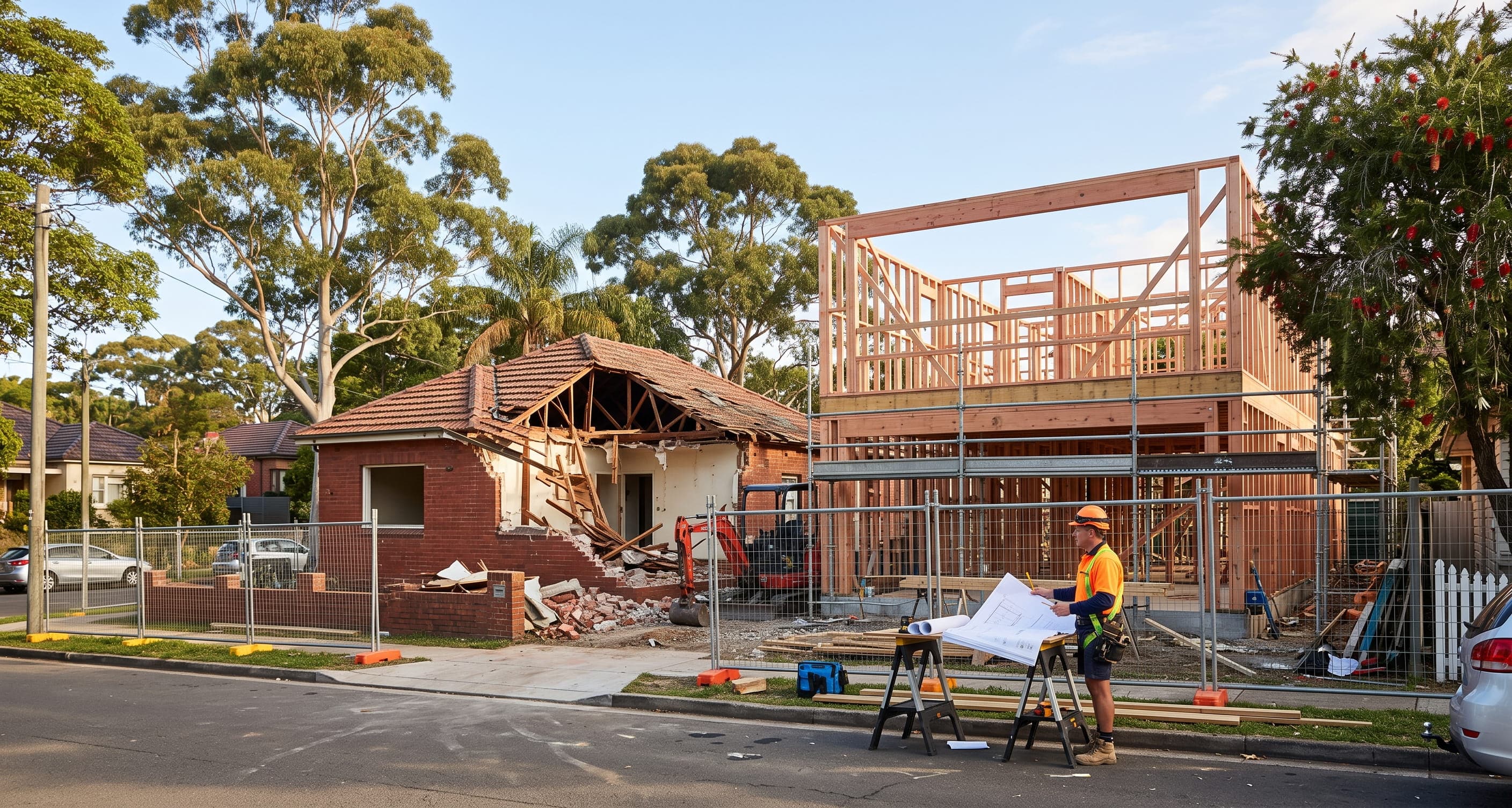
What you can do right now is lock in a fixed-price contract with an established builder. For homeowners in established suburbs, a knockdown rebuild can also be a way to get a new home without competing for scarce land.
Material costs have already risen and are unlikely to fall in the near term. A builder who has been operating through the current cycle–and whose display homes you can walk through–has existing supplier relationships, and can offer price certainty, is worth more right now than a cheaper quote from someone who cannot. The contract you sign today is a hedge against whatever the market does in the next twelve months. Understanding the most cost-effective way to build matters more now than it did a year ago.
Key Takeaways
War raises oil prices, which in turn raise construction costs, slowing new housing supply. Slower supply, on top of interest rates that have already shrunk what buyers can borrow, is why Sydney’s housing prices are where they are in 2026.
Sydney was already feeling Australia’s housing crisis before the Iran conflict. Building here was already expensive before the rate rises. This year made both problems worse at the same time. But Sydney’s south-west growth corridor, including Oran Park, Austral, and Leppington, is still a relatively accessible entry point into the Sydney property market.
Whether that creates difficulty or opportunity depends on where you are in the market and your timeline. Sellers, buyers, builders, and investors are all looking at the same set of conditions and drawing different conclusions.